A Beginner’s Guide to Ordering at a Gin Bar
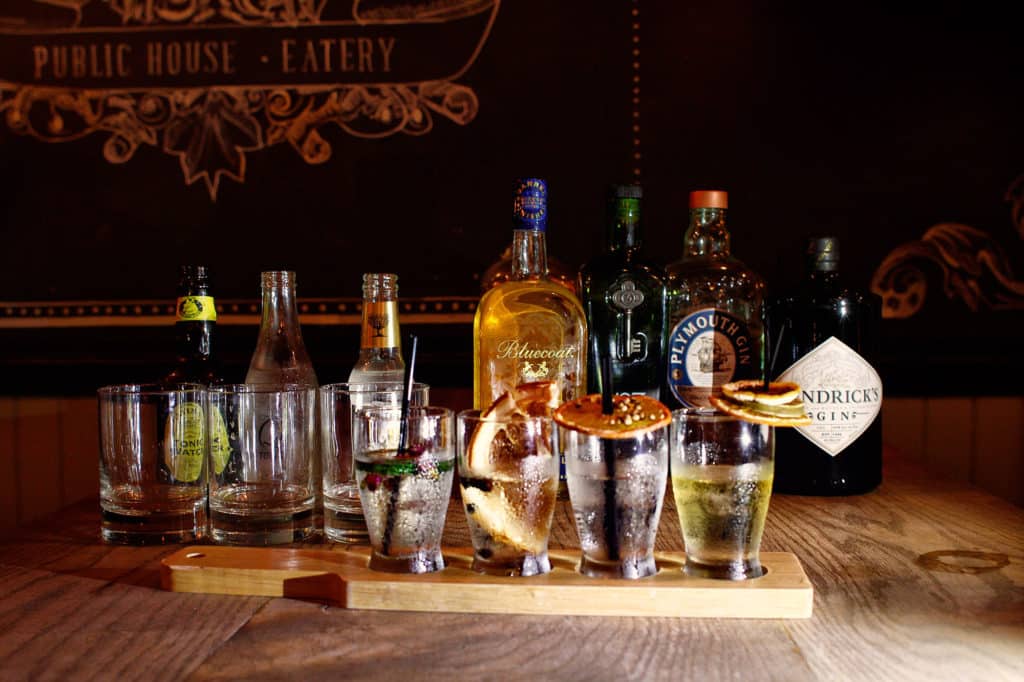
Walking into a gin bar for the first time can feel oddly high stakes. The backlit shelves are packed with unfamiliar labels, the menu reads like a small field guide to botanicals, and the person behind the bar seems to know the difference between a London Dry and a navy strength by instinct. If you usually order wine, beer, or the same two cocktails everywhere, a dedicated gin bar can seem more specialized than it really is.
The good news is that ordering well at a gin bar does not require a trained palate or a memorized list of distilleries. It helps to know a few basics, to understand what bartenders are trying to learn when they ask questions, and to recognize that there is no single correct way to drink gin. Some people love it crisp and juniper-heavy in a dry Martini. Others want it bright, citrusy, and easygoing in a tall gin and tonic. Both are valid, and both can be excellent.
A good gin bar is one of the more enjoyable places to learn how your own taste works. Gin is varied enough to reward curiosity, but structured enough that a beginner can get comfortable quickly. Once you know what to listen for and what to say, ordering becomes less of a performance and more of a conversation.
What makes a gin bar different
A standard bar might stock a handful of gin bottles, usually enough to cover a house pour, a premium pour, and a few familiar brands. A gin bar tends to go much further. You may see dozens of gins from different countries, each built around its own mix of botanicals such as juniper, coriander seed, angelica root, citrus peel, cardamom, orris, pepper, rosemary, lavender, cucumber, and many others.
That range matters because gin is not one flavor. Juniper is the defining note, but the supporting cast changes the drink dramatically. One gin can smell like pine and lemon zest, another like fresh herbs and cracked pepper, another like orange blossom or green tea. A well-run gin bar usually makes room for those differences rather than burying them under sugar or too many modifiers.
It also tends to offer more ways to serve gin well. Instead of a generic tonic from a soda gun, you may be offered several tonics with different levels of bitterness and sweetness. Instead of a default lime wedge, the bar may suggest grapefruit peel, a sprig of rosemary, or no garnish at all. These details sound small until you taste the result. In gin service, small details are often the whole point.
The first thing to know, gin has styles
People often talk about gin as though it is a single category with minor brand differences. In practice, style matters a great deal. You do not need to become technical, but having a rough map will help you order with confidence.
London Dry is the style most people picture first. It is usually crisp, dry, and led by juniper, often with citrus and spice behind it. It works beautifully in Martinis, gin and tonics, and classic cocktails because it holds its shape in the glass.
Contemporary or new western gins soften the juniper and push other botanicals forward. You might notice cucumber, floral notes, fresh herbs, or softer citrus. These can be very appealing to people who think they do not like gin, when what they really dislike is aggressive piney juniper.
Plymouth gin, which is tied to a specific place and production tradition, is often a little rounder and earthier than London Dry. Old Tom gin sits slightly sweeter and can feel softer in older cocktail recipes. Navy strength gin is bottled at a higher proof and delivers more intensity. It is not necessarily better for beginners, but in the right drink it can be thrilling.
If that sounds like a lot, remember one practical point: style affects how the gin behaves. A sharply structured London Dry gives you snap and clarity. A softer botanical gin gives you aroma and approachability. If you know which of those appeals to you, you are already halfway to a good order.
How to read the menu without overthinking it
Gin bar menus often try to be helpful and end up sounding cryptic. Terms like floral, resinous, savory, maritime, and herbaceous may appear beside bottle names or cocktails. Those words are useful, but only if you connect them to flavors you already know.
Floral usually means notes that remind you of flowers or perfume, sometimes violet, elderflower, chamomile, or rose. Herbaceous points toward green, fresh, sometimes almost garden-like aromas such as basil, rosemary, thyme, or dill. Citrus-forward gins are easier to grasp, with lemon, orange, grapefruit, or yuzu leading the profile. Spice can mean warm baking notes like cardamom and cassia, or sharper heat such as black pepper. Resinous typically refers to pine, evergreen, and concentrated juniper character.
If you are unsure, skip the tasting note vocabulary and focus on preference. Do you like bright drinks or rich ones? Dry or slightly soft? Sharp and bracing, or aromatic and easygoing? Bartenders can work with that quickly.
Menus can also tempt beginners into chasing the longest description. That is rarely the best route. Some of the most satisfying gin orders are very simple, especially when the spirit is good. A gin and tonic, a Martini variation, or a Tom Collins can reveal more about a gin than an elaborate cocktail with six supporting ingredients.
The easiest way to order well
The most useful thing you can do at a gin bar is give the bartender a clear starting point. Not a speech, just a few honest details. Bartenders are not trying to test you. They are trying to narrow a large category into one or two drinks you will actually enjoy.
A helpful order often includes three bits of information: whether you want something spirit-forward or refreshing, whether you enjoy juniper or prefer softer botanical flavors, and whether you are in the mood for something classic or something more playful. That can sound as simple as, “I usually like citrusy drinks, not too sweet, and I’m not sure how much juniper I want,” or “I want a proper gin and tonic with something classic and dry.”
When guests struggle, it is often because they say they are open to anything. In theory that sounds adventurous. In practice it gives the bartender a very wide field. A little direction leads to a better first pour.
Here are five phrases that make ordering easier and more precise:
- “I like citrus more than floral.”
- “I want something dry, not sweet.”
- “I’m new to gin, so nothing too juniper-heavy.”
- “I usually drink Martinis, Negronis, or vodka sodas,” depending on your actual habit.
- “I’d love a recommendation for a first gin and tonic.”
Those sentences do not make you look inexperienced. They make you easy to serve well.
Start with a serve that teaches you something
If your aim is to understand gin rather than simply drink it, your first order matters. Some serves showcase the spirit more clearly than others. At a gin bar, I often suggest that beginners start with either a gin and tonic, a Martini variation, or a simple sour style drink such as a Tom Collins or Gimlet. Each teaches you something different.
A gin and tonic shows how the gin interacts with bitterness, carbonation, temperature, and garnish. It is forgiving, refreshing, and a very good baseline. If the bar offers several tonics, ask which one best suits the chosen gin. A dry tonic can sharpen a crisp London Dry. A slightly softer tonic can help a floral or citrus-led gin feel balanced rather than harsh.
A Martini is less forgiving but more revealing. If you discover you enjoy a well-made Martini, you will learn your gin preferences quickly. That said, a very dry Martini can be intense for a first-time gin drinker. If you are curious but cautious, ask for a fifty-fifty Martini, which uses a more generous amount of dry vermouth and usually tastes more aromatic and less severe. It is one of the best gateways into spirit-forward drinking.
A Tom Collins or Gimlet is useful if you prefer something lighter or more familiar. These drinks still let the gin speak, but the citrus gives beginners an easier entry point. They are especially good for those who normally avoid drinks that seem too boozy or austere.
What bartenders mean when they ask questions
At a dedicated gin bar, the bartender may ask more questions than you expect. This is not upselling by default, and it is not an attempt to show off. Good bartenders are filtering for texture, intensity, sweetness, and style.
If they ask whether you like juniper, they are trying to determine whether to steer you toward a classic, pine-led profile or something softer and more modern. If they ask how sweet you like your drinks, they are protecting you from disappointment. Many people say they want something refreshing when they actually mean dry and light, while others mean cold and fruity. Those are not the same order.
When a bartender asks what spirits you usually drink, the question is about structure. A whiskey drinker may enjoy stronger, more assertive gin drinks sooner than someone who mainly drinks sparkling wine. A vodka drinker may appreciate a clean, citrus-driven gin before moving into more resinous territory. There is no hierarchy in this. It is just sensory shorthand.
If the bar is not slammed, do not be afraid to ask for guidance. A simple “What would you pour for someone starting to explore gin?” often gets a thoughtful answer. Some of the best drinks I have seen served to beginners came from that exact question, followed by a short exchange about taste.
Gin and tonic is not a default order, it is a category
Many people order a gin and tonic as if it were a fixed recipe. At a serious gin bar, it is more like a family of drinks. The gin, tonic, ice, glass, garnish, and ratio all change the final result.
Large, cold ice matters more than most beginners realize. Small wet cubes melt fast and flatten the drink. A balloon glass may look theatrical, but it has a purpose when used properly, especially for aromatic garnishes. A highball gives a different experience, often crisper and more linear. Neither is automatically better.
Then there is the garnish question. The old habit of putting lime in every gin and tonic is convenient, not always correct. A grapefruit twist can make a citrus-led gin bloom. Lemon peel can sharpen a drier style. Rosemary or thyme can emphasize herbaceous notes, but too much can overpower the drink completely. Cucumber can be refreshing with certain gins and oddly distracting with others.
If you want to learn, ask the bartender why they chose the garnish. A good answer will usually teach you something about the bottle.
Martinis, without the mystique
No drink intimidates beginners like the Martini. Popular culture has not helped. People speak about it as though it were a personality test, when really it is a highly adjustable drink built from gin and vermouth, with details that matter.
At a gin bar, ordering a Martini does not mean you need a rehearsed set of preferences. If you know none of the variables, say so. The bartender can guide you. The main choices are gin style, vermouth ratio, garnish, and whether you want it stirred and served very cold, which is the classic route.
Dry means less vermouth, but asking for the driest possible Martini is often a mistake for beginners because it can strip away aroma and balance. A fifty-fifty or a wet Martini, meaning one with more vermouth, is often more beautiful and more educational. You taste the interaction rather than just chilled alcohol.
The garnish matters too. An olive brings salinity and a savory note. A lemon twist keeps the drink brighter and more aromatic. If you are unsure, start with a twist. It is cleaner and tends to flatter a wider range of gins.
One practical note from years of watching people order Martinis in busy rooms: clarity beats jargon. You do not need to ask for obscure variations unless you actually know you like them. A straightforward sentence such as “I’d like a gin Martini, not too dry, with a twist” is both precise and easy for the bar to execute.
Tasting before committing, when it is appropriate
At some gin bars, especially quieter ones with strong spirits programs, bartenders may offer a tiny taste of a gin before building a full drink. This is generous and useful, but it depends on the bar’s flow and policy. Do not assume it is always available.
If you are genuinely torn between two styles, it is reasonable to ask whether they can describe the difference, and in some cases whether a small taste is possible. The key is to ask respectfully and sparingly. Sampling half the back bar is not a beginner move, it is a delay tactic.
When you do taste neat gin, remember that alcohol strength can obscure aroma at first. Take a small sniff from a little distance, then a tiny sip. Look for the dominant impression. Is it piney, lemony, peppery, floral, soft, oily, sharp? You are not trying to perform a formal tasting. You are trying to notice what you enjoy.
Common ordering mistakes, and how to avoid them
Most mistakes at a gin bar are not serious. They just lead to a drink that does not suit the guest.
One common misstep is assuming all gin tastes like juniper and therefore avoiding it entirely. Quite a few modern gins are far more citrus-led or herbaceous than many newcomers expect. Another is ordering the strongest or most expensive option too early. Higher proof and higher price do not guarantee pleasure, especially if your palate is still calibrating.
A subtler mistake is treating sweetness as the only scale that matters. Texture and bitterness matter just as much. A drink can be technically dry but still feel soft and easy because of citrus oils, vermouth, or tonic choice. It can also be low in sugar but quite aggressive if the alcohol and bitterness are pronounced.
Then there is the urge to mimic a more experienced guest. That rarely ends well. If your friend drinks a bone-dry Martini with navy strength gin and two olives, that says something about their preference, not yours. Starting with your own taste is far more useful than copying someone else’s ritual.
If you do not like your first order
This happens, and it is not a disaster. At a good gin bar, a polite follow-up can often get you onto a much better path. The important thing is to describe what did not work. Saying “I don’t like it” is less helpful than saying “It’s more bitter than I expected,” or “The floral note is too perfumed for me,” or “I think I wanted something brighter and less spirit-forward.”
That kind of feedback is gold to a bartender. It turns a miss into a clear adjustment. Often the second drink is where the lesson clicks. You discover that you do not hate gin, you just do not want it paired with a tonic that pushes quinine too hard, or with a garnish that turns the aroma soapy for your palate.
If the issue is simply that the drink is not your style, own that comfortably. Bars appreciate honesty more than forced enthusiasm.
Ordering with confidence in different situations
The right order at a gin bar changes with context. If you are meeting colleagues after work, a clean gin and tonic or a Collins is easy and sociable. If you are on a date and want something slower, a Martini or a Negroni variation can suit the pace, assuming you enjoy stronger drinks. If it is a hot afternoon, tall and crisp usually beats intense and spirit-forward.
Your own mood matters too. Some nights you want a reliable classic. Other nights you want the bartender to steer you somewhere new. The trick is to signal that clearly. “I’d like a classic tonight” and “I’m in the mood to try something unusual as long as it’s still dry” are both helpful instructions.
Here is a simple progression if you want to build confidence over a few visits:
- Start with a gin and tonic based on a classic dry gin.
- Next time, try a gin and tonic with a softer, more contemporary botanical gin.
- Then order a Gimlet or Tom Collins to compare how citrus changes your perception.
- After that, try a fifty-fifty Martini with a twist.
- If you enjoy the stronger style, move toward a drier Martini or a more assertive classic.
That sequence teaches a surprising amount without Gin Bar requiring you to memorize anything.
A few words on price, prestige, and value
At a gin bar, the most expensive pour is not automatically the right one for a beginner. Prestige bottles often earn their place, but value in spirits is personal. A moderately priced London Gin Bar Dry that fits your palate will be a better drink than a rare bottle whose botanicals you find distracting.
This is particularly true in mixed drinks. Once tonic, vermouth, citrus, or bitters enter the glass, some of the finer distinctions between premium gins narrow. They do not disappear, but they matter differently. Spending more can be worthwhile, especially in a Martini or a very clean serve, but it should be tied to curiosity and taste, not pressure.
If budget matters, say so without embarrassment. A professional bartender can recommend something excellent within a price range. In fact, those recommendations are often among the most thoughtful on the menu because they rely on fit rather than flash.
The real goal
Ordering at a gin bar gets easier the moment you stop treating it like a test. The point is not to impress the bartender, decode every bottle, or acquire someone else’s preferences. The point is to get a drink that suits you, and maybe learn enough from it to order even better next time.
Gin rewards attention, but it does not punish simplicity. A well-chosen gin and tonic can be every bit as satisfying as an expertly built Martini. A beginner’s order can be smart, specific, and stylish without being complicated. If you can describe what you generally like, stay open to a little guidance, and notice how the drink tastes rather than how it sounds on the menu, you will do well in almost any gin bar.
And once you find the style that clicks, whether it is bracing and classic or soft and botanical, the shelves stop looking intimidating. They start looking full of options.
The Winslow
243 E 14th St
New York, NY 10003, United States
Phone: +1 212-777-7717
FAQ About Gin Bar
How to do a gin tasting?
Start with a small pour and gently smell the gin before taking a small sip. Notice its juniper, citrus, floral or spice notes, then compare how the flavor changes with a little water or tonic. At a gin bar, ask the bartender to explain the selection and botanical pairings.
How to make the best tasting gin and tonic?
Use chilled gin, fresh tonic and plenty of ice. A common starting ratio is one part gin to two parts tonic, adjusted to taste. Choose a garnish that complements the gin's botanicals and stir gently to preserve the bubbles.
What is the smoothest tasting gin?
There is no single smoothest gin for everyone. Perceived smoothness depends on the botanical recipe, alcohol strength, serving temperature and mixer. Describe whether you prefer citrus, floral, herbal or juniper-forward flavors so a bartender can suggest a suitable style.